Showing posts with label Kissing Frankenstein. Show all posts

All For One - Anthologies


One of the more obvious challenges a writer faces is how to fill a book. Ask any novelist and they will likely tell you that the second half of a novel is easier to write because the characters and plot are already well established, and part two is often largely about resolving the consequences of part one.

For those who pen shorter material, although there are competitions and magazines out there eager for flash fiction or 2000 words on a theme, putting together a collection of stories for publication can seem onerous because short fiction can be a hard sell.

One solution is to create or contribute to an anthology, showcasing the work of several writers. Books can be themed or stand as a general celebration of the art of short fiction. (If you thought sculpture was difficult, try sculpting a 250-word piece.) Anthologies are also a blessing for those writers who are uncomfortable in the spotlight – there may be more of those than you think!

Other advantages of a multi-writer anthology

-       You have more chance of filling a book.
-       Individual writers can focus on a small number of contributions.
-       You automatically start off with a group of people keen to spread the word.
-       Those same people (unless they all live on the same street) are likely to have separate communities, increasing the potential for word-of-mouth recommendations.
-       Every author is likely to buy at least one copy* so that ought to get the ball rolling.

The challenges of a multi-writer anthology

-       There may be differences of opinion in the editing process, unless you have clear ground rules or an editor-in-chief.
-       Some contributors may not want or be able to get involved in the marketing of the book.
-       There has to be a running order, preferably one that’s carefully balanced.
-       Erm…the money.

Anthologies can be funded in several ways. Costs can be shared among the contributors (in which case it might be wise to agree a set word count for each story). Grants may be available, especially if it’s a thematic anthology or raises funds for a particular cause – the Arts Council is a good place to start in the UK. There’s still the faint possibility of anthologies being funded by publishers in what used to be called the traditional way with contributors receiving royalties from sales. There’s also the buy-out option where writers are paid a one-off fee to use their material in perpetuity.

If you’re funding the book yourself / yourselves, costs can be reduced by publishing as an ebook (if you have the time and the know-how, your only expense will be the cover design), or by producing a Print-on-Demand version.

I’ve been fortunate to contribute to four anthologies.

Beyond the Horizon is a general fiction anthology published by Bamboccioni Books. I contributed a sci-fi tale, in the spirit of Asimov, Rogue, about what it means to really live.


The Coffee Shop Chronicles Vol 1 (Oh the Places I Have Bean) is a themed anthology about coffee from A Word with You Press. It contains a mixture of anecdotes, poetry and fiction celebrating the much-loved** caffeine creation. I was one of four editors and my fiction contribution is Diner, a short tale about relationships, lies and self-deceit.


Kissing Frankenstein in a general fiction anthology published by Flash-Fiction South West. I contributed some really short pieces (some only six words long) and my main piece, Between the Lines, was a story about taking chances.
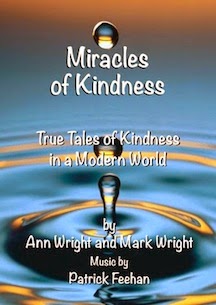


Miracles of Kindness is a themed anthology contains anecdotes about…well…kindness. My contribution, The Street Angel, is about the folly of first impressions when I found myself stranded in Chicago late one night.

My plan, later this year, is to put together an ebook anthology of my own work. Entitled Into the Void and sporting a stylish cover design supplied by www.goonwrite.com, it will feature a mixture of favourite pieces, new material and experimental work.


* Not always though. I know of an anthology where the contributors received a small buy-out fee and a significant proportion of writers never bought a copy.

** Although, ironically, not by me.

Story time

An early form of tablet, which wasn't very portable.

As the old joke* goes, "What's the difference between a short story and a novel?" Answer: The word count. Ask any creator of short fiction and they will tell you how much focus and effort and, well, creativity it takes to produce a work of short fiction that still manages to tick most the essentials off this list:

- Engage the reader and draw them into the story.
- Eliminate waste and distraction.
- Remove the author from the equation.
- Give the reader a satisfying ending that will still leave them wanting more.

In my novel, Scars & Stripes, Alex is walking down a street in the St Mark's district of Manhattan when he sees a sign on a window: What's Your Story? Led by curiosity, Alex winds up in an apartment where a bespectacled dude is hunched over a typewriter (it was the 1980s), working on a collection of other people's stories. For the sci-fi aficionados among you, this could almost be Alex's future or parallel self. It could, if it was that sort of novel.

Arguably, that scene is a metaphor for one of the novel's central premises - Alex is one of life's observers, but he also remembers small things that other people forget. The novel, and therefore Alex's story, is actually filled with the stories of other people he encounters. In the scene I mention above, Alex sells some of his real life stories (albeit fictionalised by bias and ego) to the writer who then creates something new out of them for a magazine. Ironically, Alex encounters one of those magazines, further down the line, and barely recognises his own history in there.

We're all enthralled and enchanted by stories from an early age. The structure of fairy tales and traditional bedtime stories has been pawed over by mythologists and experts to reveal common threads and forms. I've also mentioned, elsewhere on this blog, how researchers like Joseph Campbell identified commonalities found in the mythologies of different and unconnected cultures.

Like many other writers, I do read online reviews of other people's work and I'm struck how often the critics denounce the typos and grammar, or the two-dimsnional characterisation, and how rarely they turn their attention to the actual story itself. It seems to me that if the story engages the reader and captivates them, even if the writing was deemed below par, the author as on to something. 

I'd argue that stories are a rich and vital part of our psyche, individually and collectively. Stories makes us feel, consider, react and yearn. Whether it's in a theatre, at a cinema, watching the soaps or Jeremy Kyle, or even reading a book (remember those?), stories bring us to life.

If you'd like to read some of my own short stories, here are some handy links:

The Silent Hills - a 5000 word tale of suspense and revelation.
Coffee Shop Chronicles - an anthology containing my story, Diner
Beyond the Horizon - an anthology containing my sci-fi story, Rogue.
Kissing Frankenstein - an anthology containing several of my really short stories.  

Saturday Night - a little slice of Americana for free (partly inspired by Raymond Carver).


*It wasn't an old joke - I made it up. Feel free to quote me on it.

Flash Fiction that speaks for itself

Once upon a time, not so long ago, a kindly editor - by the name of Rachel Carter - brought together a disparate bunch of writers in the West Country to create a flash fiction anthology.


Fortunately, my off-colour comments didn't put her off any and five of my shortest pieces have been added to the pot. (I should point out here that, as far as I know, I'm the only writer who noticed the loophole that didn't specify a limit on entries.) 


Kissing Frankenstein & Other Stories, which takes its title from an entry by prize-winning writer Tania Hershman, is packed to the gills with intelligent, diverse and surprising flash fiction. Think of it as the bonsai of literature.


The anthology of 53 pieces, by writers from all over the West Country, was produced in celebration of National Flash-Fiction Day, which is on May 16th this year.


Along with all the other writers involved, I'd like to thank Rachel Carter and her team of word elves who made it all possible.


It's a great little read that loses nothing in its brevity and can be purchased here.