Guest spot - Tracey Sinclair - Dark Dates


They say you never really know someone until you live with them and I've found that applies to writers as well. By which, I mean, it's only when you spend quality time with them that you begin to understand what makes them tick and what life experiences they're drawing upon.

Sharing a blog like Strictly Writing is a little like being in a relationship of sorts, or maybe a creative commune. We share ideas and anecdotes, as well as excerpts. However, sometimes one of us will post something that's so visceral that it cuts through any intellectualising and brings you to a standstill.

Fellow scribe Tracey Sinclair did just that recently when she blogged about grief and creativity - you can find it here and I recommend a second reading. You'll also note from the comments we received that Tracey's willingness to share exactly what was going on in her life really touched people.

I caught up with her to find out more about her journey as a writer and how her recent experiences had impacted on her writing practice.


Was it a difficult decision to talk so openly and personally about where your life is right now?

It was and it wasn’t – I have blogged about personal things in my life before so it wasn’t a new thing for me to do, and I do think there is genuine value in sharing these kinds of experiences, but actually writing it and getting it out there was far harder than I thought and felt quite exposing. The reaction I got from people made me glad I did it though, as lots of people got in touch to say they found it inspiring and moving.

Have you found writing to be therapeutic and does this change how you write?

Not therapeutic, no, I don’t think so. I enjoy it and it makes me happy, so that has, I suppose, a therapeutic value, but I’m not one of those people who finds some sort of catharsis through writing.

You have a foot in two writing camps - fiction and copywriting / editing. How do you make time for both?

Part of the reason I became a freelancer was so that I would have more flexibility and be able to fit in more fiction writing. Because I can set my own hours I can adapt my work schedule as needed, and work whenever and wherever I want. Sometimes that does mean working very long hours and every day of the week but I don’t mind – I’m happy to be writing at 2am if that’s what it takes to get something done.

What's next for your main character, Cassandra Bick?

Cass came from a place both of love and frustration – I love the urban fantasy genre but I was sick of the fact that the female characters seemed to fall squarely into two camps, these days: impossibly kick ass lone wolf women or swooning teens, and there didn’t seem to be a place for a woman who you could picture yourself having a drink with, a woman who you can imagine living in the real world and who has friends and a job – someone a bit like me, I suppose, only with a far more interesting love life! I also wanted to write something that reflected modern London (and modern life) so wasn’t just peopled by straight white people. Plus I love writers like Jim Butcher and Joss Whedon who realise that adding humour to something doesn’t devalue it or mean you make it less serious; you can care deeply for characters but still tell a joke, or recognise how ridiculous a situation is. I love the fact that in Dark Dates many of the characters, especially Cass, realise just how insane their lives are and can still make jokes even when things are tough, because that’s how people cope with extreme situations.

In terms of what’s next for her, I honestly don’t know – I have a vague idea of what’s going to happen in the third book, but I won’t know until it’s written, as I tend not to plot too far in advance, I like the story to unfold as I’m writing it. In terms of being affected by my own recent experiences, I don’t think her storyline will be. She’s already lost people and is no stranger to grief so that isn’t a new subject for the books, and I have no plans to shoehorn anything in to write through my own experiences. I imagine all of this upheaval will come out in something, somewhere, but not just yet and I’m not sure these books are the place for it. 

What's your process when writing a Cassandra Bick story?

I tend to start with character sketches or short scenes – sometimes funny, sometimes not – that allow me to give ideas a work out then expand that into a handwritten first draft. Sometimes these stem from the fact that I think something would be funny, sometimes just from an idea I had that I’d like to see how it looks written down. I then do another handwritten draft because I think the fact that it’s a laborious process makes me pay more attention and notice mistakes. I rarely build scenes around humour, but I do reread them once they’re done to see if I can puncture any po-facedness, as that’s one of the things I want the books to avoid. I’m with Joss Whedon (again!) on this one, where he said – and I’m paraphrasing because I can’t recall the exact quote – make it as dark as you like, but then for God’s sake, tell a joke.

When and why did you decide to self-publish?

I had two small press titles published in the literary fiction genre, and was struggling to find anyone to take Dark Dates because, apparently, ‘vampires are over’, but it wasn’t the kind of thing my existing publisher would be interested in. So I thought, sod it, and just put the book out there myself, partly because I just got bored of waiting for any progress and I just wanted the first one off my desk. It’s been quite the learning curve – it’s far harder work than you’d think – but I’m glad I did it, as so many people have told me they loved the books and the reviews have generally been excellent, so it makes me feel like I wasn’t deluding myself by thinking they were good!

Where can we find any other interviews?


Where can we find out about your books?


And where can we buy your books?


Guest spot - Villayat 'Snowmoon Wolf ' Sunkmanitu - Soul of a Wolf


When I was at school, to the best of my recollection, most poetry rhymed. I also stuck slavishly to couplets, or, if I was feeling particularly adventurous, I'd try A B A B rhyming. 

Once I'd left school, however, a wider world of poetry was waiting for me beyond the gates. Roger McGough, John Cooper Clarke, Ogden Nash, Linton Kwesi Johnson and Stevie Smith, among others, led me to experience poetry as a means of personal expression, of protest, and a way to explore aspects of life that we, the readers, may never have considered (or have had to). 

Bear that in mind as I bring you an interview with Villayat 'Snowmoon-Wolf ' Sunkmanitu, who uses poetry and photography to cope with his own PTSD and to raise awareness about its impact on PTSD sufferers and the people in their lives. Regular visitors to this blog will know I've interviewed him before, but here he talks about what's next for him now that he has completed a trilogy of works in his Poetry of a Veteran series. Just like his poetry, his responses come straight from the heart, or the gut. Here he is, in his own, inimitable style.

1. Soul of a Wolf if your third poetry book, which you've said is the last in the series. What's next in your journey?

I feel the need to walk away from writing PTSD related work at the moment.  My next projects will be photography and wolf related ... focussing on photography as well as the written word.  I have had both of these projects swirling around in my mind for a few years now but I promised myself that I could indulge myself in them when I got the painful writing out of the way.  I also have an autobiographical novel planned ... but I need to rest up a lot more before getting to writing that one.

2. We've talked in the past about the therapeutic value of the arts. How has writing and photography helped you?

Creative therapies help us to process information stored as memories in a subconscious way.  With my poetry it's as though I've temporarily become a Vulcan (Mr Spock type for you Trekkies) - you don't feel your emotions, they just come pouring out in your words.  When you go back and read your own words it can be a bit harrowing because 'Vulcan mode' is switched off and you're having an emotional response to your words.  Sometimes it's as if you were in a trance and this is the first time you've seen the words and you question whether you wrote the words in front of you on your screen; computer date stamp and copyright tags says - 'Yes - you did!'

These three books have helped me to explore some of the issues that I have encountered in my periods of uniformed service, such as racism, corruption, PTSD, fear and apathy.  It's time to write about other things for a while.  I think it's also helped to get a message out there that not all members of the Armed Forces are chest-beating macho types.  We can be strong and fight when it's needed ... but some are also sensitive souls with feelings, awareness and empathy about current human issues.

3. There's a lot more public awareness about PTSD, but could you give us a personal insight into some of the challenges - and how they affect your creativity?

I would argue that the public aren't as aware as I'd like them to be.  I remember seeing an advert somewhere portraying a Veteran having a flashback.  I could relate to the content but felt that it was sensationalised in the way that it was presented; people are very impressionable and can walk away thinking that all Veterans are affected in the same way.  I find that people stereotype others much too easily ... It's the lazy option and can be
misguiding.  Disabilities affect people differently ... We may have the same condition but the way that it affects us, the way we cope and how we interact with the world around is very varied. 

On the issue of care for Veterans with PTSD - the public have to be aware that everything that the NHS provide in terms of care has a budgetary limit.  They don't have the resources to provide Veterans with what they need to cope with this condition.  The NHS works on the premise that early detection and Trauma-focused cognitive-behavioural therapy are the key.  This can work for troops returning from current conflicts.  However we need to be aware of
 a fact that seems to be pushed further and further from the minds of the general public ... We still have many Veterans from conflicts as far back as World War 2 that are still alive - still without support - still suffering in silence with PTSD.  Trauma-focused cognitive-behavioural therapy will do a little good but what these people need (myself included) is the opportunity 
to just sit and talk to someone that understands the issues - allowing us to off load and go back to living with PTSD for a while before we need another opportunity to do the same.  The budget holders have intimated that this won't happen because the issue of PTSD and Veterans ranks very low on their priority list and we just have to get on with it.  We've been getting on with living with PTSD for many generations.  A message I would give to the NHS and their government funders is that they need to remember this:  You limit the ways in which you can help Veterans that live a hellish existence resulting in a disability that arose from carrying out their duty to their Queen and Country.  They signed off on their cheques and risked their lives for the British public, as a collective ... but when they needed the help of the system after coming back to broken homes and shattered lives, the British Government made them acutely aware of the following - there is very little honour in civvy street and the Military Covenant is just a myth.


Some organisations have done very well on the back of the wars in Iraq and Afghanistan ... One in particular is 'Help for Heroes'.  They branded themselves in a way that captured the public's imagination and support ... But what people don't know is that they only support projects and troops from the war with Iraq onwards and don't support Veterans or projects from earlier conflicts.  Think back to the number of military operations that the British Armed Forces have been involved in since (and including) World War 2 and try to imagine the real numbers of unsupported Veterans out there that did their duty ... only to be forgotten until a lonely bugle sounds on a November morning.  Remembrance Day could be viewed as a hollow political exercise.

You then have other organisations that make you feel like a worm for asking for the support that they advertise they're ready to give you.  I had such an experience after getting my first home.  I needed things like a vacuum cleaner and some other bits and pieces.  The tone of the officer dealing with the application towards me was at the very least condescending and may have harboured a darker issue.  I have never made a formal application for help from such organisations since.  

Disabled artists and writers can be easily manipulated or abused if they're not careful.  It's a material world and money's the new religion.  Creative people must protect their Intellectual Property very carefully, particularly in light of the current changes made to orphan works in the UK.  For more info see http://www.wolf-photography.com/html/IP-UK/respectIP.html and
please have a good look around the whole of the section of my site.  It will teach you how to protect your internet assets and give examples of how to sell or publish your work without falling prey to the rip off merchants out there.  


As a disabled artist, I have limitations.  This is why I do therapeutic work only nowadays.  I have to be very careful with my energy and how I use it.  I tend to visualise a pot and keep tabs on the levels within.  If the levels are below half, I stop working and rest ... For as long as it takes to fill the pot up again before carrying on.  Coping with a disability, with a community that in the main are ignorant of PTSD and with everyday life - is tiring enough.  When you add something else to the equation (e.g. dealing with publicists, media, book distributors, other businesses etc) life can become pretty difficult.


4. Is there life after PTSD? 


There's life WITH PTSD!  We just have to be careful with our energy, our expectations and how the condition affects us (e.g. what our particular triggers are and how to minimise exposure to those particular scenarios).  

If we're lucky, we find people with kind hearts and open spirits along the way that will help us to achieve our ambitions, whatever they may be.


The key is to be realistic about the demands that we place upon ourselves.  I have worked hard all my life until I was retired on ill health in 2006.  I now do 'therapeutic' or 'permitted work' as it's now called.  This allows me to work at my own pace without external pressure and allows me to continue contributing to society in some way.  I get days when I'm very low on energy and I remind myself that it's okay to rest up and just look after myself - no one else is going to do it ... and that I'm not lazy.  There are days when I'm too hard on myself ... That's the result of the work ethic that I have had since the age of seven!  I cannot earn a profit now ... and I'd be happy if the business broke even every year ... but the real reward is that my
creativity allows me to continue living with PTSD.  I've been lucky enough to experience things that still make me smile deep down inside - and most of these are through my photography of the natural world.  If my words reach someone and help them to feel understood or provide empathy or perhaps make them laugh - then I'm content.  Hopefully they're laughing or smiling at something that's meant to engender that reaction rather than thinking my books are crap!  

Whatever your disability is ... find a way to do something creative around it - allow your mind and spirit to be free for a while.

5. Are there any poets or other writers that have particularly inspired you while writing your three poetry books?

None.  When engaged in my photography or writing, I tend to become more insular and don't let other influences enter my mind.  However, it's amazing how many times Wordsworth's Daffodils echoes through the corridors of my memory.  The whole object of using creativity to cope with PTSD is to process my issues and to release the valve - it's a bit like flushing after a good dump - but not as smelly.  So I tend to release a lot more than I take in.

6. You wrote The Words of a Wolf some time ago now. Has the publishing landscape changed much since then?

I think so.  There's a lot more work being self-published and I feel that's great!  How many times have you bought a book on the recommendation of a press piece on the back cover, only to find that it's complete bollocks?  People flock to those books because the big companies use contacts to create spin to make them sound like good books - which some are - but not a lot.  

Retailers have changed their attitudes as well.  When 'Words of a Wolf' was released, the reason for writing the book and details of the project were explained to as many branch managers at Waterstones as possible (to raise awareness of how PTSD affects Veterans).  Their response and support is something that I'll always be grateful for - http://www.waterstones.com/waterstonesweb/products/villayat+22snowmoon+wolf
22+sunkmanitu/words+of+a+wolf/7548871/ - particularly the staff that entered 'book seller' reviews.  140 Waterstones stores held copies of Words of a Wolf at their branches.  

I contacted Waterstones centrally when 'The Way of the Wolf' was released only to be told that decisions would not be made by local managers any longer, that purchasing was regionalised and that they expected 50-60% discount on all purchases before they would consider ordering any stock in.  I was also told that that they weren't happy with me quoting the fact that the book was available in 'Amazon Kindle format' on the back cover - which I found particularly strange as I'd been reliably informed that Waterstones were going to be selling Kindle readers.  If you're designing your cover for your latest book - check out the distributor's opinion on these matters.

7. What do you hope people will gain from your latest book?

I hope that they'll gain a bit more awareness of what living with PTSD is like.  People afflicted by the condition are subject to the same issues that everyone lives with but Veterans have a hard time because they come back to society that doesn't understand where they've been, what they've done, how they've been treated and conditioned ... and the sense of
abandonment that they're left with when they come back to a society that doesn't really want them.

From my own perspective: we were in situations where honour meant everything.  We were ready to lay down our lives for our colleagues and people that we were ordered to protect.  We cared for each other.  We were equals.  Materialism was minimal.  When I look around in civvy street I see very little honour, a huge decline in moral and basic good manners ... and a
huge rise in selfishness based on materialism.  This isn't the UK that I fought for.  Too much has changed ... and it's not down to immigrant workers, differing cultures and religions or any of the spin that people wishing to divide the UK populace would have you believe.  I feel that we're losing our way because there's too much greed and corruption in our political and legal systems ... we need to address this and to provide positive role models from the emerging generations of celebrities, business people and leaders.

8. Do you plan to do any public readings?

I've had an offer from poet and playwright Dave Puller to do a public reading and would to take him up on it.  I'm also planning on doing some readings as part of the workshop elements of my rolling exhibition of poetry and photography that starts in November 2013 - see http://wolf-photography.com/html/exhibition.html.

The challenges?  I could end up a quivering wreck!  :o)  One of the attributes of PTSD is disassociation - perhaps I'll try to make positive use of a negative.

9. Where can people find out more about your book and the project?

Pop along to www.wolf-photography.com - you'll find everything there.

You can
 also follow my progress on these social media:

Evolution of an idea

It's not big and it is clever

Give me a writer who knows exactly where they're going and I'll give you - and them - a round of applause. Any writer I've ever met, be they published or yet-to-be-published, may have an inkling, or even an ambition, but that's about it.

In a sense, that's part of the joy of writing. You never know quite where it will lead, either on the page or off it.

So if you're sitting comfortably, I'd like to tell you the story of a story. Two stories, actually.

Once upon a time, David French and I created As Above So Below magazine - a satirical take on all things 'alternative', along with anything else that took our fancy. In Issue 13, I wrote a piece, The Daily Grind, about an imagined encounter with a new age luminary in a San Diego coffee house. It included new choices for a modern generation:

Crappuccino - with a laxative for colonic health.
Mocha Shocker - with a battery in it to jumpstart your day.
Americano - with oil dashes.
Bratte - with a mild sedative for children.
Depresso - with serontonin for that extra lift.


As you might have guessed, I'm not a coffee drinker. At all.

Wind forward some considerable time and a jaunt through Craigslist brought me to a competition to get a story / piece of writing in a coffee themed anthology. Naturally, having read the rules, I thought of modifying Daily Grind. And spookily, the indie publisher was based in San Diego. Fate, huh? Ish.

Good news: they liked the piece and said it was funny. Fortunately, the editor-in-chief had spent time in the UK and enjoyed British humour. 

Complicated news: the prizes were vouchers for coffee houses and they planned to sell the anthologies there. Consequently, my anti-coffee piece wasn't quite the ticket, but if I wanted to write something else they would consider it favourably. 

I took a different tack next time and wrote a short story with a serious motif, Diner, about domestic abuse. They accepted the story for print.

Wind forward a couple of months or so and I'm on the anthology editorial team, as well as helping out with administration and posting on the site. Pretty soon I am officially the go-to guy* for new projects in indie publishing house A Word with You Press.

Four of us edit the book in chunks. The paperback comes out and is well received by those who bought it. However, it did not sell well, partly because the price point was too high (the editor-in-chief wanted to include every writer who submitted something, to give them a start in print) and partly because our distribution chain wasn't up to the job. We were learning on the fly, and my, how we learned - often at the e-i-c's expense.

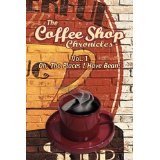
Wind forward a little more time and AWwYP has several books on the go, and one or two in the pipeline. Coffee Shop Chronicles Vol 1 will hopefully become a collector's item, as there are plans afoot to bring out a smaller version instead, containing just 50 entries (we like to think of it as the espresso version). It will give us the price point we need to make the book cost-effective.

My point though (because you've probably been wondering by now) is that the first stepping stone to CSC Vol 1, and my association with AWwYP, was writing a piece for a magazine that hardly anybody read. So few, in fact, that AASB magazine hasn't had an issue out for over two years. If there is a moral here, it's that a good idea is never wasted - not unless we forget it or refuse to act on it.

I'm proud of CSC Vol 1 for many reasons: the cover, my story being in it, the way that four editors worked so well in our respective cities, the fact that 100 writers were given a little floor space by Thorn Sully, and that it's a real, live paperback. And a little bit shiny.

AWwYP recently vacated its premises, and the e-i-c is going on a book tour and considering what the future of AWwYP will look like. It's an uncertain adventure (but all the best ones are) and I look forward to the next chapter. 

Get it while it's hot.
* Project Development Director - all writers love a good title!

Guest spot - Sarah Painter - The Language of Spells


Writers can be a little like children, who only stick with the kids that enjoy the same games. Only, in our case, we writers can suffer from genre-phobia. 

Silly really, because the writing process is the same (inspiration, torture and progress, in that order) and the elements of good writing are the same (captivating plot, engaging characters, authentic dialogue, etc.). 

It can be really invigorating to meet writers of other genres to see what inspires them to put pen to paper, and where it has taken them. So, without further ado, I'd like to introduce you to Sarah Painter, who has kindly agreed to answer some questions

The Language of Spells can be described as Magical Romantic Fiction - what drew you to write this kind of book?
I was in a total writing slump. I'd just finished a masters in creative writing at St Andrews and had spent the previous year trying to change my natural writing voice into something more literary. Plus, I'd parted company with my agent (amicably) which I knew was the right move, but it felt very scary. I wanted to cheer myself up so I thought I'd try writing the kind of book that I enjoyed reading when I was in need of comfort - warm romantic comedy. The magic just crept in; very subtly at first, but then it grew...

Did you do any research into beliefs and superstitions?
I love books that mix magic with the everyday world, and have always read widely in folklore, myths and legends, so I already had a fair basis of knowledge. I did research herbalism and checked which plants would actually be available in Gwen's garden in Wiltshire.

When did you realise you were writing a series, and what additional challenges does that bring?
Um. I didn't, actually, but was absolutely thrilled when my publisher asked if I'd write a follow up to the book. After years of rejection, hearing an editor say 'we love these characters and this world and we'd like more' was amazing.

Which writers have inspired you, and continue to inspire you?
So many! I'm inspired by the work ethic and tenacity of all my writer friends. Back before I wrote my first book I was inspired by Stephen King's On Writing to just get on with it, and I'm inspired every time I read a book that I love.

Tell us about your current book and its protagonist.
It’s a contemporary story of family and romance, with added magic. Here’s the blurb:

Gwen Harper left Pendleford thirteen years ago and hasn’t looked back. Until an inheritance throws her into the mystical world she thought she’d escaped. Confronted with her great-aunt’s legacy Gwen must finally face up to her past.

The magic she has long tried to suppress is back with a vengeance but gift or burden, for Gwen, it always spells trouble. She has to stay – she has nowhere else to go – but how can she find her place in the town that drove her out after branding her a witch…?

Where can we buy it?
Thank you for asking! It's available from amazon.co.uk and amazon.com. I believe it is also going to be available for Kobo and Nook, but it's not listed on those sites, yet.


What question did you hope to be asked?
Would I like a drink? Tea. No, wine…Tea, then wine.

What question were you glad never came up, and why?
How long it takes me to write a first draft (I’m slow and it makes me anxious to think about it!).

And finally, as an aside*...I've written a transatlantic comedy drama, Scars & Stripes, which has been described as 'bloke lit' or 'lad lit', and has some romance in it, after a fashion. In your experience, are there many male romantic fiction authors out there?
Great title! Yes, I think there are plenty of male romantic comedy authors (although they are often branded differently to their female counterparts). Mike Gayle, Nick Hornby, Mil Millington, and Matt Dunn spring to mind.

Thank you so much for hosting me, Derek!


My giveaway (to win a Nook e-reader) ends tonight

And I will be appearing on Chick Lit Reviews tomorrow 


My website:

Twitter:

Facebook:


* 'Aside' being a byword for, "Please help me with my research."

Cheat?


Recently, the writer Freya Morris asked the question: is traditional publication a vanity project? Which led me, via an innovative mental process, to interpret the question as: is it, in fact, cheating?

That's given me good for thought. It seems to me that, in order to cheat, by definition there has to be a set of rules.

When I first started out writing fiction, I used to think - in some hazy, undefined way - that the world of authors and publishing was some kind of meritocracy. Or perhaps it operated on some kind of conveyor belt principle. Essentially, you queued up, collecting ideas along the way. Then you wrote your book and submitted it to a 'few' agents. In the fullness of time - and   it seemed to me that three to six months was a fair and equitable arrangement - one of the agents took you on and they subsequently (three to six months again) found you a publisher. And hey presto, in due course (or, as I like to think of it, three to six months' time), your book hit the shelves.

QED, you might say, if that particular plan had worked for you. You might, but I didn't.


Ask any writer, though, and they'll give you a plethora of stories to demonstrate the unreliability of rules. Even at the writing stage, new plots emerge, characters dwindle and genres metamorphose (for example, my thriller, Standpoint, was originally intended to be a crime drama, until the characters thought better).


Once the book is written, plans can fall through. That agent who didn’t reject you initially and asked to see the whole manuscript (be still my heart) eventually turned you down because he didn’t feel he could make the connections to get you the breakthrough and development your book deserves, in an already crowded market.*

Or you wrote a book that suited a genre perfectly. But what scuppered you wasn't necessarily the quality of your work; it was the relatively superior quality of other people's work at the same time.

Or the publisher who signed you up already has a full schedule for the next 18 months, or can only offer a small print run for newbie authors, or tells you at the contract stage that they will require an author's contribution of a large bag of cash.**

Then again, the book might get out there to critical acclaim, but few sales; the two forms of success not being interdependent.

There is another, unwritten rule (forgive the irony). And that is that every successful author ought to have worked hard for it (suffering a little, perhaps, on behalf of all the writers who won't make it that far), and thoroughly deserve it.

Here, I feel, we all cheat in one way or another. Maybe the writing comes easily to us, or luck plays an important part in the process. We know someone who knows someone. Maybe a suggestion comes, unbidden, to try door 58. A chance remark at a dinner party leads to an 'in'. (I've heard this is the number one reason that writers attend dinner parties, followed by the chance of free food. Personally, I've always considered my lack of dinner party invites to be a major flaw in my campaign for publication.)

All of the above only seems like cheating, to others, if what has worked for one person cannot be formulated and replicated by everyone. Which is a lot like the rest of life really.

Plumbers (I know, plumbers and writers...) often get jobs on the basis of personal recommendation, which can be hard lines for a new plumber with no track record or connections. It isn't fair; no, it's competition.

So my message to you, dear fellow writers, is this: lose your sense of entitlement. It's a myth and an unnecessary burden, implying, as it does that your turn will inevitably come. And cast aside any notion of there being a meritocracy. When it comes to getting your work into print, or online, you use whatever connections and resources are available to you. There are no rules. Maybe that's why it's called fiction.

Write well, edit well, submit well, self-publish well and promote well. That's all you can rely on, and even then the outcome isn’t guaranteed. Expect anything else and, frankly, you're only cheating yourselves.

* Actually said to me, once. If it's flannel, it's impressive flannel.
** They wanted over £5000. See elsewhere on the blog for the tragic details!

Once upon a tome...


Hang out the flags, I've got an idea for a story.
We tend to see events and perspectives from the beginning of things, without always appreciating the beginning (or the ending) before the beginning.

Sometimes, it's the 'why'.

Why was the 'wicked fairy' in Sleeping Beauty wicked?
What drove Laurie Lee to start his journey in As I Walked Out One Midsummer Morning?
What made Craig Campbell choose his way of life in Sinclair Macleod's The Reluctant Detective series?

When it comes to novels, I think that authors juggle three distinct needs.

What does the reader actually need to know, what does you need them to know, and (still with me?) what do you need to know purely for yourself?

Initially, in my Brit thriller, Standpoint, I alluded to main character Thomas Bladen's difficult childhood. But the more I wrote, the more I wanted to know what actually went on. So I explored that and some of those formative events filtered through to the manuscript. That way the reader can trace a thread all the way from who my protagonist is all the way back to some of the experiences that moulded his behaviour.

Even if you're writing about a baby, its home environment and the attitude of its parents (which will contribute to its conditioning and the life awaiting it) owe a debt to the past.


I'm in the process of submitting two novels to agents / publishers (at time of writing, I haven't decided which road to take). To complicate things further, each book is a different genre. Standpoint is a thriller about a civilian who joins the UK's Surveillance Support Unit, while Scars and Stripes is a transatlantic comedy drama set in the 1980s. 

Being back on the submissions trail, it's easy to buy into the notion that I'm there at the beginning. Except that I'm not. My trusty spreadsheet reminds me that I've been contracted four times for other books, and offered a further three contracts (at different times) for a fantasy novel, Covenant, that I eventually chose to self-publish.

As writers we tend to see ourselves at the start of something, which can be energising or daunting depending on how you feel about that all-important next stage. But it's important to recognise the steps and individuals (seen and unseen) that brought us to this point. 

The journey of a thousand miles may well begin with the first step, but let's not forget all the other journeys that put us there, willing and able.