Showing posts with label Musa Publishing. Show all posts

Guest spot - Cynthia Vespia


Musa Publishing, which receded into the mists last year, was more than just a publishing house. It was a gathering place for a range of authors, some previously published and others easing their way through that magical doorway for the first time. I also found it a wonderful opportunity to meet writers of other genres and discover, to my great delight, that we weren't so very different in many ways.  

But I have to say, I haven't encountered many authors who have also been a model, a trained mixologist (yes, of course I had to look it up!), a licensed private security guard, and an award-winning video editor. It's a wonder Cynthia found any time for writing!


Q1.      When did the writing bug first bite you?

I had the bug early on. I used to read a lot so I always liked the escape that stories brought me. It wasn’t until high school that I got really interested in becoming a writer. It was after reading Dean Koontz novel Intensity that I decided I wanted to be an author. Years later I actually got Dean to sign that book for me!

Q2.      You've had a varied and interesting past. Are there any experiences you draw upon in your writing?

I draw from all experiences in one way or another. That’s what writing is…experiences. Specifically, I used my time as a fitness competitor for the training scenes in Demon Hunter and I drew upon my experience as a security guard for Lucky Sevens.

Q3.      Given your work as a graphic designer and video editor, do you always have a cinematic approach to your books and stories?

I do but it’s more from watching a lot of movie and TV! I mean who among us writers has never visualised their characters as a specific actor, or wondered what their story might look like on the big screen?

Q4.      What are your creative goals in 2016?

Creatively I have quite a few series to either finish or continue writing. Demon Huntress will conclude, I’ve gotten a few ideas to expand my novel Lucky Sevens into a trilogy, and I’m working on 2 brand new series that I will be shopping to publishing houses and agents.

Q5.      Tell us about your latest book and how it came to be written.

Well, speaking of new series I just finished writing the first in a 7 part dystopian thriller. Without giving too much away I’ll just tell you it is a bit of Game of Thrones meets The Walking Dead! It’s about the survivors of World War III. I got the idea for it from watching (not reading) Divergent. I’ve never read the books so I have no criticism but the movie was lacking for me so much so that I wanted to make a better one…there goes that cinematic approach again!

I also just finished the second in the Demon Huntress series which is available now on Amazon, Smashwords, and Barnes and Noble. The idea for the Huntress came from a fan at one of the conventions I attended. She said “it would be cool if the hunter was a vampire.” So I took that suggestion and ran with it! Which is why Khalen struggles so much in the Huntress series.

Q6.      How do you handle some of the common challenges writers face?

I love everything about the writing process. And after finishing my new novel I’m excited and passionate about it again. What I struggle with, as most writers probably do, is in the marketing. Writing is a business and the marketplace is so saturated now with self-published novels that it is growing more and more difficult to stand out from the pack. You may have written a great book but if no one can find it then that’s where things get tough. And, unfortunately, it has become more of a popularity contest than it is about the writing. How many Facebook likes can you get, or Twitter followers? That becomes word of mouth for a novel but it doesn’t necessarily mean the novel is any good. I don’t know about you but I don’t have all day to be on social media…I’d rather be writing!

Q7.      Where can we find your books?

All of my books are across multiple digital platforms. Amazon, Barnes and Noble, Smashwords, Lulu, and my own website www.CynthiaVespia.com where you can also find out more about my graphic design and video services. I do custom cover design and book trailers at an affordable cost.

Q8.      Which authors and books continue to inspire you?


Dean Koontz will always be my first love, I just really enjoy his writing style. I’m also a fan of Mary Higgins Clark which is why I’ve somewhat left the fantasy genre behind and I’m leaning towards more suspense/thrillers. But I’m also always on the lookout for new authors as well.

2015, thanks for everything.

Branching out.
It's been a funny old year. In a good way, I mean. I started 2015 with the familiar writer-inbox staring game familiar to anyone who has both a Labrador and a biscuit tin. And then, as if by magic (because it was certainly magical at the time) I had a book deal for a thriller series. 

Inevitably, that experience has changed my perception of myself as a writer, and how I look at my books, and also - for this series at least - how I write.


There's no getting around it, success matters. I can open doors, liberate potential and liberate us to go on to new projects and new directions.  

Actually, let's not beat around the bush - it has been an amazing writing year. Freelance clients have come and gone - some unexpectedly - and I could not have predicted, back in January, how 2015 would unfold. I've posted my gratitude list below, along with a considerably shorter list of disappointments.

There aren't words to fully express my thanks to everyone who has shared a link on social media, or downloaded a book, or hosted a post. I know many of you had your own books to attend to, so I am doubly appreciative. 

If there is anyone out there who has read any of the Thomas Bladen books - or anyone else's, come to that - please consider writing an honest review on Amazon. It makes a huge difference to authors to know what readers really think about their work and it helps improve a book's chances of being seen (by some algorithmic alchemy). 

Anyway, without further ado...

Highs
- Standpoint published on 17th March 2015.
- Line of Sight published on 10th May 2015.
- Cause & Effect published 28th November 2015.
- Being Tiffany Truscott's guest of her BBC Radio Cornwall show.
- Being the recipient of other people's support and generosity in helping to spread the word about my books.
- A hugely successful British author agreeing to host a blog post from little ole me.
- Starting a new magazine column about creative writing.
- The Cornishman newspaper sharing my book news with their readers.    

Lows
- Musa Publishing, who first brought The Silent Hills and superhero club (now self-published) to life, closing their doors.
- A national newspaper book reviewer not having the time to read / review Standpoint.
- The hugely successful British author, who agreed to host a blog post from little ole me, not doing it after eight months of email ping-pong.

I couldn't end this year without thanking Jasper Joffe and Joffe Books for exceeding my expectations as a debut thriller author, and giving me a masterclass in writing for a commercial publisher. It has been an absolute blast and I look forward to breaking new ground with you in 2016.
  
I'll leave you with this well-known quote, which I like to think of as the writer's creed:

Again I saw that under the sun the race is not to the swift, nor the battle to the strong, nor bread to the wise, nor riches to the intelligent, nor favour to those with knowledge, but time and chance happen to them all.

If I could pass on one thought to anyone writing or thinking about writing, it's this: just write, and keep writing. Amazing things are possible, whatever your story and whatever your personal story. (See my blog post in January for more on that topic.)

Farewell to Musa Publishing


Tomorrow marks the end of Musa Publishing. Although I’d had some short fiction in anthologies and on websites, Musa was the first publisher to put my work out as books. Initially I was hesitant because ebooks were a new venture for me, but what won me over was their warmth,  organisation and openness. It wasn’t just a business it was a also a thriving community of authors, sharing tips, support and experience.

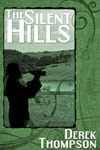
The Silent Hills is a 5000 word suspense story and I was surprised when they took it on as a standalone work. In hindsight it may have been due to their generosity of spirit and desire to build a list than for any commercial potential because, although well-received  and reviewed, The Silent Hills failed to really establish an audience.

However, what TSH did do was get me involved in the Musa community. I met authors of genres I’ve never been near – LGBT, Regency Romance and Erotica, to name but three – and found that our similarities as writers are much greater than our differences. Whatever the genre, the requirements of good writing are the same – always have been and always will.

TSH also gave me the confidence to try something different. Next time I wrote Superhero Club, a children’s book for a mid-grade audience. If anything this book was even more of a challenge because it dealt with bullying, food issues and the value of friendship. It was, once again, a story that wrote itself. An added complication for the book was that it was firmly set in the UK, but Musa’s house style was US English.

SC came out about a year after TSH and, again, did not set the publishing world on fire. It could be that the subject matter was too close to home for the target readership. I did contact a variety of youth organisations, but either the timing was wrong or the staff had any pressures and priorities. I mention all this because I recognised (and still do!) that any publisher can only do so much. Every author must play their part in actively marketing their books and the more creative the approach the better.

I didn’t submit another book to Musa. I was thinking about a sequel to SC, but that would have been in the autumn. I didn’t part with any full-length novels because I thought the house style would make edits a nightmare. Editing was always a collaborative experience, so I had some idea of what I might be taking on!

All of which is a way of saying I had less to lose with Musa with my books, but I was fully committed to their cause. It was a virtual place of passion and enterprise with an online infrastructure that’s unmatched by anywhere else I’ve seen. Musa have been responsible for dozens of books and dozens of first-time authors. It’s to the credit of the team that they are ending Musa precisely because they have been unable to run it along commercial lines. In the meantime royalties have always been paid and everyone that I’ve spoken with in the Musa family has felt a genuine sense of loss and admiration for the dream that has now come to an end.

Thank you, Musa, for everything, and good luck to my fellow Musan authors out there.

“Nothing good is a miracle, nothing lovely is a dream.”
 ―  Richard Bach,   Illusions: The Adventures of a Reluctant Messiah


The Silenced Hills

Image by kind permission of
Kelly Shorten and Musa Publishing
All writers love stories, and some say that the best comedians are really storytellers - with a bit of tragedy thrown in for good measure. I'm not really sure where this tale fits, but I've been itching to share it with you.

Back in the mists of time I was travelling from Cornwall to London by train and a story began to unfold. It was the tale of a man on the run, perhaps even from himself. It unfolded over the course of the five hour journey and, from the beginning, was known as The Silent Hills. Many writers have that experience of a story arriving, fully formed, and this was one such gift.

In August 2011 I was fortunate to come across Musa Publishing. To my surprise and delight they enjoyed The Silent Hills and wanted to publish it as a standalone story. There swiftly followed some mid-Atlantic editing and a cover design, before TSH was duly published in October of that year. 

The whole process has been an education and a joy, but - and not for want of trying - TSH never soared to great heights. As a standalone story, frankly, it stood alone. I was encouraged by the publisher to write a follow-up, which made perfect sense when you read the story. However, the 'voice' wasn't there for part two and I knew I'd have to create the plot and narrative this time, which risked ending up with a contrived piece of writing. (Yes, I know that all writing is contrived, but there's often an added inspiration or intent that breathes life into the endeavour. Not so this time.)

I don't know what constitutes good sales, as I have nothing to compare TSH with. It received some good reviews and the feedback suggested that people appreciated the same things about it that I did.

Well, folks, time moved on and I wrote something completely different for Musa - the mid-grade story superhero club. Elsewhere, when I wrote the first of my Brit thrillers, Standpoint, I like to think that some of TSH's DNA was also present. One great thing about having Musa publish The Silent Hills was that one of my fellow authors there suggested I join the International Thriller Writers to get regular updates connected with the genre. 

At that time the newsletter covered novels, but not short stories. However, three years is a long time in writing and politics. ITW started listing new short stories and I thought it might be good to get a line in for The Silent Hills, as part of its third anniversary as an ebook. All of which was fine. However...two mini events coincided.

1. The ITW kindly gave The Silent Hills a mention and included Musa's book link.
2. Musa wrote to me on the three year anniversary to remind me that rights would be reverted to me, unless I wanted them to continue publishing The Silent Hills. I, of course, understood that rights reverted to me automatically, so when I received a contract requiring an electronic signature, I assumed it was to re-contract TSH for another three years. Not so. It didn't help that I'd checked out the email and e-contract using an iPad, which is not blessed with a giant screen. 

The upshot is that TSH's rights were returned to me and, quite rightly, Musa removed all versions of The Silent Hills available for sale online. Of course, this occurred at the very same time that the ITW came out that included TSH and a sales link. This is why, if you happened to receive the ITW newsletter, and you liked the title, The Silent Hills, you might have been perplexed why it was impossible to get hold of a copy.

As the young John Connor said in T2: Are we learning yet?

We are now!
Today's lessons are:
1. Always take copies of book reviews.
2. Always read the contract carefully!
3. Always have a Plan B.

Realistically, I now have two choices:
a) Republish The Silent Hills myself, as a standalone story.
b) Incorporate it into a collection of short stories.

Whichever route I take, or even if I decide to retire TSH, I'd like to thank the good people at Musa Publishing for getting my story to a wider audience. It's been quite a ride!

The Value of Feedback

It's said that a true friend is one who will tell you what they really think - and why. For a writer, getting reliable feedback is invaluable. Just as a good proofreader can spot those rogue apostrophes and homonyms that you read past without noticing, so a good reviewer can tell you the essential and occasionally bitter truth. 


One must use discernment these days, of course, when reading social media and online book reviews because they offer such a wide canvas for jealousy, mean-spiritedness and invective, as well as encouragement, support and constructive feedback - if you're lucky. 


It's all in the game, I suppose, and for every book that's praised to the rafters there will also be a proportion of readers who thought it stank like last week's haddock. In fact, I received what must surely rank as the worst review I'll ever receive (on that site at least!). If I tell you it was for my magical fantasy, Covenant, and on one of the major - and tax ambiguous book retail sites, you can easily find it if you're curious.


I'll wait for you...

Ah, there you are. What did you think? Me? I was both disappointed and amused by it. Firstly, it suggested that I hadn't given the reader something of value - which is what I think most writers strive to do, irrespective of the topic or genre. Secondly, it amused me because I'd be hard pushed to get a review that bad again under any circumstances. (Although no one has reviewed my gag ebooks yet...)

The real worth of feedback, to me, is that it's an indication of whether I've succeeded - in the reader's eyes - in parceling up my ideas, feelings and themes into a cohesive package. More than that, where it's fiction, I want them to have felt something. Where my reviewer, who didn't like Covenant, is concerned, I can at least be certain that they felt something!

Many months ago I spoke with my editor at Musa Publishing about finding out if my mid-grade book about bullying and transformation, superhero club, might be suitable as an education or support tool. With their blessing, I contacted two organisations connected with young people's well-being, as well as a couple of local schools in Cornwall. The schools didn't respond, but eventually, after some polite reminders - over five months and one year respectively - the two organisations said they either didn't have time or were not in a position to review my book. And you thought agents and publishers took a long time...

Undeterred, although frankly pretty ticked off by the experience, I contacted two more organisations, and almost immediately (within a day or so), I had responses from each. (Note to self: choose wisely in future and perhaps ring up first.)

One organisation has now provided three brilliant pieces of feedback, yielding some unexpected comments. Remember the context here - this feedback is from professionals working with vulnerable / troubled children.


Pros

- Suitable for a young person who enjoys reading.
- Liked the style and conversational approach.
- Felt it illustrated the benefits of talking therapy.
- It's simple and gets to the point, making it quite accessible. 
- It gives awareness that adults have issues as well.
- An interesting story covering various issues, giving an insight into how bullying affects people.- A very touching story and easy to follow, it could help a young person understand how a group could help them.

Cons
- Didn't like the use of American English although it probably wouldn't be a problem for young people.
- Concerns that the group of young people in the book were copying the bullying behaviour towards the bully.
- Some of the language was difficult for some children to understand.
- The supportive group of young children bullied the bully and the teacher just ignored the situation, sending out a negative message to vulnerable children readers that there's no point in telling teacher as they won't do anything about it anyway.

I'm indebted to the reviewers because it has given me a completely different perspective on my children's book. 

It all raises some interesting questions:
1. Would a rewrite of Superhero Club turn it into a useful educational / support tool?
2. Would a rewrite of Superhero Club increase its popularity?
3. If I hadn't had that feedback from professionals, would I have been content with the book as it stands?
4. What would my publisher, Musa think?

I was talking recently with abstract artist Harriet Hoult, who will be guesting on this blog soon, and she felt that each piece of art she produced had its own conclusion. Perhaps every piece of creative output, once it exists in the outer world (i.e. beyond a drawer or a file on a desktop), has become what it was supposed to be. Maybe, where a book or a story is concerned, revisiting and editing after that point only unravels all the elements that put it together in the first place? 

What's your feedback on that?


Guest spot - Stained Glass Summer by Monday Hardwick

Many writers will tell you that the story chose them. There they were, having a coffee at home or dozing on a train, and then WHAM, a voice or a face or gem of an idea appears. That's how a story of mine, The Superhero Club arrived on the page, and Musa Publishing signed it up back in January for a November launch date. It's a children's / YA tale of friendship, truth and acceptance, and unlike anything else I've written before. (That's right, no one dies!) 
To get to the bottom of what it means to be a YA author, I'm delighted to introduce my fellow Musa author Mindy Hardwick. 

1. Do you plot your books in detail from the start or do you let them develop organically?
Stained Glass Summer developed from character. One night, a spunky, teenage girl character sat down in my blue and white striped chair and said, “Hello, my name is Jasmine. It is time to tell my story.” A year later, I began working on my MFA in Writing For Children and Young Adults from Vermont College.  In that program, we worked a lot on character with the idea that plot would evolve from character. 

2. Have you changed your approach to writing since the publication of your first book?
Stories still start with a character, but, I have learned to do more outlining and plotting! I’ve learned a lot by attending RWA Conferences and listening to romance writers talk about what it takes to write two to three books a year—lots of outlining and plotting! I’ve also learned that with a good outline, I can work on scenes out of order.  So, if I’m stuck on one part, I can move to a different part of the story and not get too jumbled! 

3. What drew you to the YA genre, and does it present any special challenges as a writer?
My writing voice seems to fall naturally into the YA/Mid Grade genre. The topics I like to explore are teen and tween issues and my characters are young and trying to find their way in the world. One of the biggest challenges for me is I tend to write stories which are “tween.” This is a cross between the young middle grades and not quite young adult. I had a hard time selling Stained Glass Summer because of this age issue. It didn’t quite fall into either YA or MG. It was in the middle. But, I used to teach middle grades (6th-8th grade), and I knew the story belonged to their age group. 

4. Do you view high profile book series - such as the Twilight books - as positive role models for children and young adults?
Any book which gets a teen reading is great! We all like different books at different times in our lives. I think it’s important to find the right book for the right kid at the right time. 

5. Are there any authors and characters that have inspired you?
There are two books which inspired me as a teen and directly inspired Stained Glass Summer. Homecoming and Dicey’s Song by Cynthia Voigt. Dicey’s mother abandons her and her siblings in a shopping mall parking lot. Dicey must figure out how to get to her Grandmother’s and start a new life over. Dicey and my character, Jasmine, would be very good friends. They both have been abandoned by parents and they both have to start new lives with relatives. Both characters are resilient and know how to survive against the odds.

6. Tell us a little about your writing routine.
In the morning, I answer e-mails, work on workshops, blog, and update social media. I teach six distance learning classes to educators, and they can keep me busy! In the afternoon, I write. Lately, I’ve been leaving the house to go to coffee shops or libraries.  I try to go to yoga at least once a week, and I walk on our wooded trails a lot. I need that exercise to clear my mind and help me think about my stories. I find that a lot of my writing time is planning time while I am doing other things!

7. What was your journey to becoming an author at Musa?
Long! I worked on Stained Glass Summer for almost ten years before I sold it. I got a lot of “almost” or “not quite right for our list.” Then, I sent the manuscript to be professionally critiqued by freelance editor, Sarah Cloots.  It was after that point that the manuscript sold to Musa.

8. How would you describe Stained Glass Summer to a total stranger?
Twelve-year-old Jasmine adores her photographer Father and wants to be an artist just like him. But when Dad abandons the family, Jasmine is sent to spend the summer with her Uncle on a Pacific Northwest Island. Soon, Jasmine is learning stained glass from island glass artist, Opal, and thinking she might just be developing a crush on Island boy, Cole. But, it’s not until Jasmine finds herself mentoring another young artist that she can truly let go of her Father and call herself an artist by her own terms.

9. Where can we find out more about you and your writing?
Stained Glass Summer is available at Musa Publishing, Amazon, Barnes and Noble, Itunes.

There is also a free discussion guide on my website here.  And I give Skype talks about the book.

You can find me at:
Twitter: @mindyhardwick

10. What are you working on at the moment?
I am working on a tween/upper middle grade for boys entitled, Granddad Toys. I am also working on a chapter book for elementary school kids. 

In praise of... Musa Publishing


My short fiction work, The Silent Hills, is contracted to Musa Publishing and the whole process has been a revelation.

Within days, they'd sent me a contract, held a skype call to introduce me to the team, discussed cover ideas with me (and assigned an artist) and - be still my beating heart - gone through my text with a fine tooth comb and made comments and recommendations for changes.

Compare that to another, nameless publisher, who took 1 year, 3 months and 16 days just to email me a generic rejection. (Boo, hiss and so forth.)

Musa is a new and vibrant publisher, with a wide range of genres and authors - many of whom have been published elsewhere in print and electronically.

The Silent Hills comes out as an ebook on October 14th, for $0.99. If you have enjoyed reading these blog posts, why not treat yourself to one of my stories.

In the meantime, here are the Musa team, in their own words:

Editorial Director - Celina Summers
Editorial Director Celina Summers has been involved in e-publishing as an author, editor, review coordinator, senior editor, and managing editor for over a decade. She studied theater and political science at college in Tennessee, including master class studies in playwriting with famed dramaturge Howard Stein. First published in high school and now the award-winning author of sixteen novellas and novels, she left her career in professional theatre to return to her first love, writing and publishing, in 2000. As the driving force behind Aurora Regency, she produced over forty historical novels in the year before coming to launch Musa Publishing.

Financial Director - Kerry Mand
Kerry Mand comes to Musa with eight years of business ownership/management. As the Office Manager/Owner for those companies, she was responsible for Accounts Receivable, Accounts Payable, and payroll for employees. She recently worked for another publisher as the office manager before coming to Musa Publishing. Kerry is thrilled to be part of Musa from the beginning and cannot wait to see where it takes us in the future!

Promotions Director - Elspeth McClanahan
Elspeth comes to Musa Publishing after working as Promotions Director for another publisher. Before entering the publishing world, she spent many years promoting and assisting in the promotion of the theatres she has worked for and the mothers groups she belongs to. Her promotional experience includes, but is not limited to, review coordinator, conference representative, conference speaker, contest judge, special guest speaker, “After the Show” host, and Promotions Director. As an author writing under a pseudonym, she has published two novels and one novella.

Art Director - Kelly Shorten
Kelly Shorten has over fifteen years of Web/Graphic Design experience under her belt. Besides what she does for Musa, she also works on independent contracts working with businesses for their promotional items. She has been designing covers and marketing books for authors for over three years. Kelly was the Art Director for a publishing company for over a year.

Director of Editorial Production - Coreen Montagna
She has a doctorate in Pharmacy, but is an artist at heart. Even while working on her degree from the University at Buffalo, she took as many art classes as she could on the side: ceramics, photography, art history. Cory has been a voracious reader since elementary school and was heartbroken when she discovered that there are people who never read books if it isn’t required for work or school. As Musa's Director of Editorial Production, Cory combines her love of art and words in a wonderfully unexpected way. Her prior experience includes freelance work as a graphic designer and typesetter, as well as working with another publishing house as their lead copy editor and book designer. At Musa, Cory is the Head Copy Editor and is responsible for the interior book layout and formatting as well as eBook production.