Time and Tide and Recovery


Back in the Dark Ages, when I was in Junior School, they would occasionally wheel out a large television and we’d watch part of a series that was considered both entertaining and educational. From what I recall, we never got to see a whole series – perhaps two or three episodes at most (out of six, I think). 

One series involved an alien child – you knew he was an alien because his face and clothes were silver – befriended by an Earthling child and trying to escape the clutches of someone in authority. Yes, it does sound a little like ET.

I have very little recollection of the other series, apart from the ending! A group of children have followed clues to a small box hidden in a garden, possibly in a rockery, and inside the box there’s a note that reads: Time does not stand still. As a child this was not the kind of treasure I wanted to find. 

However, as well as not remaining static time can bestow perspective. History, I once scribbled into a notebook, is just a series of stories we tell ourselves over and over again. Ask someone else and the history changes. Time changes history not only because there may be more facts and less propaganda as the years roll on, but also as a consequence of the context changing.

What’s this got to do with writing? Quite a lot and not much, depending upon your perspective.

I had a bout of flu recently, which is still taking its toll (rambling alert), but I can now see some improvement every day. I spent the first day of proper sickness in bed – I haven’t done that since I was a child. When it comes to flu, you know the drill – shivers, sweats, headaches, pains in the teeth, the jaw, behind the eyes (I also had them for a day or three before), sneezing, coughing, nausea, no sense of taste and a total loss of appetite. I also had tinnitus, which included repetitive noises – sometimes like music or machinery – and repetitive thoughts. 

Sleeping for maybe an hour at a time, sometimes far less, your perception of time itself changes. Even my dreams were on a loop. I approached the same wall at least half a dozen times and I can’t get past it. (Yes, I am a fan of John Wyndham’s novel, The Midwich Cuckoos, as well as the 1960 film, Village of the Damned – I like your thinking!)

Not really eating and not really sleeping, apart from feeling very debilitating, can act like a detox because your mind begins to empty. Precepts and concepts that seem inviolable peel back with ease like a banana. 

I’m not going to lie to you – as soon as I became cogent, or something very like it, I checked my emails. Much of it, while not exactly spam, was not really relevant. The bulk of that was elective, perhaps when I was interested in specific information about ebook marketing, business models, entrepreneurship, marketing, governmental policy, civil liberties, cyber-security and all the other good stuff I read about for business and pleasure.

But…when you only have five minutes of focused attention it tends to concentrate the mind wonderfully. What I did with my five minutes was this:
1.    I updated a freelance profile to show I was ill with flu and therefore all work was suspended.
2.    I changed my preferences and eradicated around 50% of all not really relevant emails. I’ll take a view on the other stuff when I want to take a closer look at it.

In my next five minutes of clear thinking, which doesn’t include the time slot where I just felt sorry for myself and was only slightly amused by Anne coughing like a distressed sea lion (of course, she had the flu first…), I did some actual thinking.

Writing requires introspection, and lots of it, not only so that you can trace the muse through the wondrous forest of your own imagination (where both fiction and non-fiction are born), but also so that you can get your head around the other stuff that fits around your writing and connects you to the world – preferably the parts that wants to buy your work.

Illness, however, doesn’t believe in media campaigns and schedules. It has ‘missing out syndrome’ pegged: you can’t miss out if you’re not really interested.

The world, of course, goes on without you and you might lose a little business. Then again, that can happen any day of the week. I think I might have lost a job not so long ago over less than a penny a word, although that might have been the flu addling my pitching technique.

Where was I? Yes, don’t wait until you’re unwell to stand back and take stock. Make time to regularly ask yourself the difficult questions:
1.    What sort of writer have I become?
2.    What sort of writer do I want to be?
3.    How am I measuring my success?

That last point is all-important. In business we’re told that the bottom line is profit and loss. Well, yes, as a business; but not as a human being. If you’re so focused on leverage and margins and all the other stuff that can make being in business so interesting that you don’t see the bigger picture, you’re really missing out on something vital.

Writing makes writers what they are, but it doesn’t make them who they are.

Put your pen down; turn off your tablet, desktop, laptop, or smart phone. Live. Before you do, here’s something to ponder:

There will never be another day exactly like today, so what will you do to distinguish it from all the others?

Look alive, people – spring is coming. It’s time for some changes, and some more vitamin C.

All For One - Anthologies


One of the more obvious challenges a writer faces is how to fill a book. Ask any novelist and they will likely tell you that the second half of a novel is easier to write because the characters and plot are already well established, and part two is often largely about resolving the consequences of part one.

For those who pen shorter material, although there are competitions and magazines out there eager for flash fiction or 2000 words on a theme, putting together a collection of stories for publication can seem onerous because short fiction can be a hard sell.

One solution is to create or contribute to an anthology, showcasing the work of several writers. Books can be themed or stand as a general celebration of the art of short fiction. (If you thought sculpture was difficult, try sculpting a 250-word piece.) Anthologies are also a blessing for those writers who are uncomfortable in the spotlight – there may be more of those than you think!

Other advantages of a multi-writer anthology

-       You have more chance of filling a book.
-       Individual writers can focus on a small number of contributions.
-       You automatically start off with a group of people keen to spread the word.
-       Those same people (unless they all live on the same street) are likely to have separate communities, increasing the potential for word-of-mouth recommendations.
-       Every author is likely to buy at least one copy* so that ought to get the ball rolling.

The challenges of a multi-writer anthology

-       There may be differences of opinion in the editing process, unless you have clear ground rules or an editor-in-chief.
-       Some contributors may not want or be able to get involved in the marketing of the book.
-       There has to be a running order, preferably one that’s carefully balanced.
-       Erm…the money.

Anthologies can be funded in several ways. Costs can be shared among the contributors (in which case it might be wise to agree a set word count for each story). Grants may be available, especially if it’s a thematic anthology or raises funds for a particular cause – the Arts Council is a good place to start in the UK. There’s still the faint possibility of anthologies being funded by publishers in what used to be called the traditional way with contributors receiving royalties from sales. There’s also the buy-out option where writers are paid a one-off fee to use their material in perpetuity.

If you’re funding the book yourself / yourselves, costs can be reduced by publishing as an ebook (if you have the time and the know-how, your only expense will be the cover design), or by producing a Print-on-Demand version.

I’ve been fortunate to contribute to four anthologies.

Beyond the Horizon is a general fiction anthology published by Bamboccioni Books. I contributed a sci-fi tale, in the spirit of Asimov, Rogue, about what it means to really live.


The Coffee Shop Chronicles Vol 1 (Oh the Places I Have Bean) is a themed anthology about coffee from A Word with You Press. It contains a mixture of anecdotes, poetry and fiction celebrating the much-loved** caffeine creation. I was one of four editors and my fiction contribution is Diner, a short tale about relationships, lies and self-deceit.


Kissing Frankenstein in a general fiction anthology published by Flash-Fiction South West. I contributed some really short pieces (some only six words long) and my main piece, Between the Lines, was a story about taking chances.


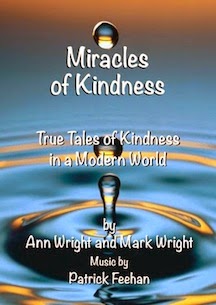
Miracles of Kindness is a themed anthology contains anecdotes about…well…kindness. My contribution, The Street Angel, is about the folly of first impressions when I found myself stranded in Chicago late one night.

My plan, later this year, is to put together an ebook anthology of my own work. Entitled Into the Void and sporting a stylish cover design supplied by www.goonwrite.com, it will feature a mixture of favourite pieces, new material and experimental work.


* Not always though. I know of an anthology where the contributors received a small buy-out fee and a significant proportion of writers never bought a copy.

** Although, ironically, not by me.

And now for some good news...

Branching out.

I'd planned to post something about anthologies, but that will have to wait. Why? I'll tell you because a lot has been happening. No, I haven't finished the first draft of The Caretaker yet. However...drum roll....


I signed a contract recently with Joffe Books for my two Brit thrillers, Standpoint and Line of Sight to be published as ebooks. They also have the first option on the other three books in the Thomas Bladen series. The Caretaker is the next in line, so that rather creates a welcome sense of urgency.

Another nugget of positivity was seeing a letter of mine in the Winter 2014 edition of the Society of Author's journal, The Author.

Writers spend much of their times in their heads, or facing a page / screen. After that it's a strange and often bewildering journey to get a response, never mind personalised feedback you can actually work with.

How wondrous and stranger still to receive an invitation to submit something and then, after a few weeks and some rapid emails back and forth, an offer of a contract.

The blank page still needs to be faced every writing day and I'm the same person I ever was (although, it has to be said, there's a little spring in my step now). However, now, for the first time in quite a while, I'm eager to see what the edits look like from someone in the industry - what they read into the stories and what they think does or not suit the market. 

As far as I'm concerned I've written my book/s I wanted to write, so bar a culling of any of my favourite characters, I'm open to any improvements that will turn a writers' tale into a commercial novel.

If you write short fiction or novel length stories, is there anything you draw the line at when it comes to other people's edits?

Guest spot - Mridu Khullar Relph, International Freelancer

While there is no magic bullet for freelancing success there is a wealth of useful information out there online. So much so that sometimes it's hard to know what to download and where to spend your valuable reading time. You need a filter and the one that I use can be summed up in a single word: character. 

I like to spend my time with people who not only inspire me but whose writing gives me a flavour of who they are. As a general rule, I don't do corporate (which comes as no surprise to anyone who knew me in my BT days).

Mridu Khullar Relph is an international writer and entrepreneur that I always make time for. She has her own way of doing things and talks about the writer's life as well as how to get the right words on paper / screen. 

Happily, she has made time for me too and agreed to do this interview. Have a read, check out the links, and add her to your resource list.
1. As an international journalist and writer, how did you compete in a global market when you first started out?

Looking back, I think I stood out because I was constantly coming up with new and interesting stories from India that my editors had never heard of or seen published elsewhere. At least in my early years, if a major publication had covered a story, I almost never went near it. Instead, I made it my goal to find stories that hadn’t been told before. One year, I traveled across India trying to find stories of women who were doing unique and interesting things and many of them had never been told before. I’d also try to take major news stories and find slants or angles to them that made them unique. This frequently allowed me to break into publications such as TIME and The New York Times.

I’ve found that often, it’s about the story. Find a good one and most editors will have a hard time saying no.  


2. Following on with the international theme, some freelance sites are being criticised for passively encouraging a ‘lowest bid’ approach to secure jobs on offer. Obviously, in a market that embraces different economies, pricing and budget will always be relative. How might authors based in the Western hemisphere gain an edge if they cannot compete on price?

An experienced professional is an experienced professional no matter where in the world you live and in my understanding, high-quality professional writers who live in Asia and Africa frequently charge equal to, if not more than, their Western counterparts because we’re so rare and because we have to work so hard to negate these perceptions of low-quality work based on our location. I never recommend competing on price, no matter where in the world you are.

Compete, instead, on quality. Come up with the best story ideas, write perfect drafts, deliver your work on time, speak to your editors, go above and beyond for them, especially when you’re new to the craft and still learning the ropes. Build relationships, not only with editors but other writers. Share information. Be generous. Give referrals freely. Work hard. Keep learning. Keep practicing. Treat every assignment as if it were paying $1 a word. Never get cocky.

That’s it. It’s pretty simple, really.


3. Do you approach your non-fiction and your fiction differently in terms of time management, headspace and creativity?

Absolutely. I treat my non-fiction, which mostly comprises freelancing at this point, as a business because it is what pays my bills and helps buy chew toys for the dog. So I approach it exactly how a person should approach a business - I run my numbers regularly, I don’t accept work below a certain rate, I’m always careful to carve out time for marketing, and I’m aware that I need to make a certain amount of money per week or month for me to consider freelancing a sustainable way of making a living.

My fiction, on the other hand, makes no money at this point in time and so I treat it more like a hobby or a side project that hasn’t quite taken off. I’ll often write in bed, frequently only when the mood strikes, and there are long periods when I have to neglect it entirely. That’s fine for now, but I’m hoping that at some point in the next two years, my fiction will start making money, too, and at that point I will certainly start approaching it differently.


4. Are there any places in the world you would particularly like to live in and why?

I’m currently dividing my time between my two favorite countries - India and the UK. For now, that works perfectly for me and is the perfect blend of east and west that I like. 


5. What motivates you to write so much content for free, and do you feel writers at the beginning of their journey should try it?

I’m assuming you mean my blog because I don’t ever write for free, nor do I ever endorse that anyone do so.

I started writing my blog back in 2002 when I was first starting out in freelancing. I kept it up intermittently, sharing personal experiences of my travel and things I was learning about the freelancing business as a solo female traveler and a journalist writing for international publications from India. At the time, I seemed to be the only one successfully doing so, and I wanted to share the lessons I learned with people who were following my work, mainly freelancers from countries in Asia and Africa. In fact, many of my readers did go on to write for The New York Times and TIME magazine and it encouraged me to continue sharing those tips, something I do to this day.

In fact, so popular did my little advice blog become that it has actually now become its own website—The International Freelancer (http://www.TheInternationalFreelancer.com). On my own website and personal blog, I’ll continue sharing lessons that have to do with my career and sharing notes about my journeys in the writing world and life. 


6. You write about creativity - is there any book you return to time and again to call out to the muse?

Bird by Bird by Anne Lamott is a perennial favourite not only because she’s so straightforward with the truth about the writing life, but because she does it with so much humor and depth. I love re-reading this book every few years and it never fails to inspire.


7. There are some writers - I’m one - who are happy to write about deeply personal experience. Where would you draw the line in your writing?

I draw the line at family, I think. While I do write about my life and of course, that involves my family, I’m always careful to tell my story and not theirs. My husband is actually pretty open and doesn’t mind my writing about us and our life at all, so it usually does come down to me where that line is and I tend to be cautious more often than not. I won’t often write about my son.

I used to write a lot of essays when I first started writing but lately, I’ve found fiction to be a lot more effective and engaging form of telling parts of my own story.


8. Have you had any success syndicating your work in print? If so, any tips?! I hold my hand up - this one is specifically for me, as I have a back catalogue of Green Living humour pieces that I’d love to find a second home for!

Unfortunately, no. That’s one area I’ve never actually pursued and know very little about.


9. Where can we find out more about your writing?

My personal portfolio is at my personal website, www.mridukhullar.com, but I also run a website for freelance writers and journalists called The International Freelancer, http://www.TheInternationalFreelancer.com.


10. Are there any other forms of writing you want to try?

I’m very interested in audio at the moment, so learning how to write for podcasts and radio is definitely something I’d love to explore in the coming months and although it’s not writing, I also really like the idea of speaking, so I’ve actively been soliciting opportunities in that area as well.


Visit www.TheInternationalFreelancer.com to download 21 query letters that sold to top publications, including The New York Times and TIME, for free.

The truth of it?


Do writers of fiction, like journalists, owe a responsibility to the truth?

As a writer of both fiction and non-fiction I've been asked how I compartmentalise my brain when it comes to finding inspiration.

"How do you know whether an idea will result in a blog piece / article, or a story? I mean, they're completely different types of writing, right?"

Erm...not really. Oh, sure, I know that writing about reincarnation and magical beings clearly isn't what you'd call conventional copy, unlike anonymised data and the value of terabit storage. However, even once you get past the requirements of grammar, spelling and punctuation, there are other shared conventions.

1. The writing has to meet the needs of its audience in terms of information, tone and relevance.
2. The writing has to obey the logical conventions of the genre (I'm calling non-fiction a genre today).
3. You need to deliver on your promises.

Examples? Certainly, step this way.

Your headline deliberately provokes a reaction and the subheaders suggest you have pertinent answers to your core question. But you skirt around the issue and end up leaving your readers high and dry.

You write a fantasy novel, where a magical ring can save the good guys, but each time it's used one of their kin has to die. All the way through the book there have been noble sacrifices, until our two heroes are there, unarmed, cornered by marauding orcs / wizards / demons. Never fear, they can use the magical ring - only which one of them will survive to tell the tale? Imagine how peed off you'd be if no one died (oh, just me then...). You might feel as though you'd been cheated.

Writing for children and young adults places further demands on the writer. Mostly, there are happy ever afters, but that hasn't always been the case. The shadowy heart of many traditional 'fairy' stories is well-documented, despite the Disney cinematic versions that have all but replaced them in popular culture.

Should we though, sometimes, just tell it how it is?

Let's face it, Disney Studios are unlikely to option The Old Curiosity Shop; not without substantial rewrites, anyway. The fabulous writers, Jacqueline Wilson and JK Rowling, are just two authors among many who allow children to experience some of life's harder lessons on the page.

When I came to write my mid-grade ebook, Superhero Club, I spent some time considering why children and young adults read books. Here was the list I came up with:
-    Escapism.
-    Wish fulfilment.
-    Looking for answers.
-    Curiosity.
-    The enjoyment of a good read.
-    Permission to experience experience.

Once I'd met my main character, 12 year-old Jo, and understood what the story was about, I realised I had a duty to show the shadows of her world and to accurately portray the ugliness of bullying and its impact on lives. As the plot developed and secondary characters found their way into the spotlight (that's how it worked in my head), I also saw how friendship and self-acceptance were the shining threads in the tale. It was important that the story wasn't too preachy, although I wanted Superhero Club to include the following messages:

-    It's never the victim's fault and there are positive things they can do
-    Hope opens the doorway to possibility
-    Everyone has a story, a reason for what they do, even if we never get to hear it in detail
-    There aren't always easy solutions
-    We are more than our circumstances, whatever they may be

Today I'm being interviewed about Superhero Club over at Sharon Ledwith's blog. To be in with a chance of winning a free copy, pop over this week and leave a comment.


Life hacks from writing fiction

Lovers of fiction, whatever the genre, will often tell you that it's true to life (for them) and portrays real people with real emotions, often going through extraordinary circumstances. Fiction allows us to live vicariously, and to explore 'what if', often - to quote from the TV classic, The Water Margin: "...In a world very different from our own."

Of course, it could be said that fiction - and especially the writing of fiction - also has a lot to teach us about life in 'the real world'.

1. Character is revealed by how a person responds to circumstances.
Think about Stephen King's The Dead Zone for a moment, and the insight we gain into Greg Stilson from his first scene. It tells you everything you need to know. We have the full measure of him for the rest of the book.

2.   Show, don't tell.
Following on from the previous item, talk is cheap actions speak louder than words (although they are revealing too).

3.   Adverbs give colour to actions. As Bananarama sang, it ain't what you do but how you do it. Think about the difference between smiling joyfully and smiling malevolently. For those of you who rally against the humble adverb (one wonders exactly how you rally), just consider how you might want your actions described in some other way.

4.  Life is a series of drafts, followed by a series of edits.
There's a common idea that the first draft is for the writer, the second draft is for the reader, and all subsequent drafts are for the agent / publisher. The important point is that writing - like living - is a process rather than a destination. It's also not a pass and fail exam. If life deals you a rejection or a failure, it's time to regroup, redraft and redouble your efforts.

5.  It stops when you do.
One often cried writers' lament, especially in the early days, is: "When does it get easier?" Or they ask what it takes to be a proper writer. The funny thing is that getting published doesn't make you a writer. It makes you published, sure, but it's only writing (and continuing to write) that bestows that title on you fairly. In life, a dream or ambition is only over when you say it is. No one else, just you. Of course, you may have to modify your goals and aspirations - that's part of the editing process too!

6.  NANOWRIMO
November is National Novel Writing Month, although any month will do. It's a commitment to lay some foundations, however rocky, and worry about the quality later. Writers aim for and commit to a certain word count per day for an entire month. They share this goal and activity with other writers who offer mutual support, because everyone wants everyone to do well. Whatever you are doing, it's important to find a supportive environment, preferably with knowledgable peers, and to learn as you go along.  

7. Plotters and Pantsers
Some writers don't write a word of prose until they know exactly what happens to whom and when. For others, writing is a glorious leap of faith, starting with a seed of an idea and raw enthusiasm. Whatever your style, either way, it's a journey of becoming. Sometimes in life, prior planning prevents poor performance. At other times, you can't afford to wait, so dive in!

8. Take your inspiration from life and the lives around you.
Many first novels draw directly from personal experience, whether it be composite characters from your own life, or true stories you've seen, heard or known first-hand. Writers know that when you pay attention, look closely and listen, the world is filled with extraordinary people, each with their own unique stories. There are also universal themes, played out in subtly different hues on living canvases. Whatever you aspire to become, or struggle to deal with, know that someone else has stood in very similar shes and found a way through it.  

9. POV
Point of View. Three small words that make all the difference on the page. I once started a novel drawing directly upon personal experience, so I naturally wanted to write it in first person. However, I soon found that intimacy constraining. What I did was start afresh, in third person, and then I found it easier to separate my book and what my characters did from what had actually happened (well, according to my recollection, anyway). In the end, after several chapters and a few thousand words, I went back to first person, but with a different perspective on the scope of the book and what could happen. 

Another word for POV is perspective. Writers learn that even in their own books it's not always about them. Characters do strange things, suggest new ideas, confound us and generally breathe new life into our fiction - if we're lucky. Life can do that too, often when we least expect it. Sometimes it's about something bigger than our needs and our concerns. A shift in perspective can make all the difference.    

10. Writers write - what are you?
Like I said earlier, you can tell a writer because she or he writes. It's as simple as that. Any qualitative assessment is for the critics. So if you want to know who you are, and who you're perceived to be, take a close look at what you do on a regular basis!

Top ten excuses for not paying up

One of the benefits of a conventional employer / employee relationship - apart from the free pens - is the certainty of a regular salary. However, when you step off that merry-go-round and join the freelance dodgems, all manner of hurdles can get in the way.

Here's my countdown of the inexcusable, the incomprehensible and the downright laughable. I hope they amuse you - they were hard won - and that you enjoy the comments in brackets. I would also love to hear the pleas of poverty you've had to put up with, and what you did about them.

Here we go...

10. I've had a lot of outgoings this month (paying other writers, maybe?).

9. I went on holiday for a week (although the payment deadline was actually before you vacated).

8. I wanted feedback from friends first (and maybe a whip-round).

7. I was too busy making money to pay you. (A work of genius.)

6. Crowdsourcing hasn't come through yet (now you tell me...).

5. I was in an accident. (Sorry to hear that. However, you only need one finger for Paypal.)

4. I didn't like what you produced, although I've never told you before - and I can now specify my requirements fully.  (Better late than never...)

3. I kinda thought, despite our agreement, that you'd work these two hours for free, as an opportunity (to starve).

2. I'm broke (and it's your responsibility now).

And the number one spotª - which also genuinely happened to me...after chasing the client for weeks.

1. Sorry, I've been really busy - I've got a new puppy. (She gladly showed me the picture when I asked. ºIt was a cute Dalmatian. However, despite assurances that she would now pay the invoice, ten days went by with nada contact. I lost patience, fired her and kept the work she hadn't paid for. She being the client, not the puppy.)


Looking sharp


You don't have to be smart these days to recognise a SMART goal when you see one. Sing it with me, people:
Specific
Measurable
Achievable
Realistic
Time-bound

SMART goals are really useful, both personally and professionally, giving shape and definition to abstract aspirations. Those five filters are also a great way of applying a little objectivity.

However...

Not so long ago I was on the member's forum for Sophie Lizards' http://beafreelanceblogger.com and the community was discussing blog post ideas. I got to thinking then that maybe it was time for a new acronym for goals (I'm also a fan of new proverbs, as any reader of The Little Book of Cynics or As Above So Below magazine can attest).

Hence, SHARP goals!

Singular - A defined objective that can be a subset of something larger.
Holistic - All implications and impacts on environment and people have been considered, as well as how achieving this fits in with the bigger picture. (If you achieve 'X', then what?)
Ambitious - This  goal stretches you and demonstrably furthers your ambitions.  In other words, this goal matters and takes you forward.
Reasoned - You've thought this through and determined that, all things considered, this makes sense for you to do right now.
Practical - You understand the steps necessary to achieve the goal.

How do you decide which goals are the right ones for you?

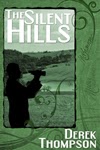
The Silenced Hills

Image by kind permission of
Kelly Shorten and Musa Publishing
All writers love stories, and some say that the best comedians are really storytellers - with a bit of tragedy thrown in for good measure. I'm not really sure where this tale fits, but I've been itching to share it with you.

Back in the mists of time I was travelling from Cornwall to London by train and a story began to unfold. It was the tale of a man on the run, perhaps even from himself. It unfolded over the course of the five hour journey and, from the beginning, was known as The Silent Hills. Many writers have that experience of a story arriving, fully formed, and this was one such gift.

In August 2011 I was fortunate to come across Musa Publishing. To my surprise and delight they enjoyed The Silent Hills and wanted to publish it as a standalone story. There swiftly followed some mid-Atlantic editing and a cover design, before TSH was duly published in October of that year. 

The whole process has been an education and a joy, but - and not for want of trying - TSH never soared to great heights. As a standalone story, frankly, it stood alone. I was encouraged by the publisher to write a follow-up, which made perfect sense when you read the story. However, the 'voice' wasn't there for part two and I knew I'd have to create the plot and narrative this time, which risked ending up with a contrived piece of writing. (Yes, I know that all writing is contrived, but there's often an added inspiration or intent that breathes life into the endeavour. Not so this time.)

I don't know what constitutes good sales, as I have nothing to compare TSH with. It received some good reviews and the feedback suggested that people appreciated the same things about it that I did.

Well, folks, time moved on and I wrote something completely different for Musa - the mid-grade story superhero club. Elsewhere, when I wrote the first of my Brit thrillers, Standpoint, I like to think that some of TSH's DNA was also present. One great thing about having Musa publish The Silent Hills was that one of my fellow authors there suggested I join the International Thriller Writers to get regular updates connected with the genre. 

At that time the newsletter covered novels, but not short stories. However, three years is a long time in writing and politics. ITW started listing new short stories and I thought it might be good to get a line in for The Silent Hills, as part of its third anniversary as an ebook. All of which was fine. However...two mini events coincided.

1. The ITW kindly gave The Silent Hills a mention and included Musa's book link.
2. Musa wrote to me on the three year anniversary to remind me that rights would be reverted to me, unless I wanted them to continue publishing The Silent Hills. I, of course, understood that rights reverted to me automatically, so when I received a contract requiring an electronic signature, I assumed it was to re-contract TSH for another three years. Not so. It didn't help that I'd checked out the email and e-contract using an iPad, which is not blessed with a giant screen. 

The upshot is that TSH's rights were returned to me and, quite rightly, Musa removed all versions of The Silent Hills available for sale online. Of course, this occurred at the very same time that the ITW came out that included TSH and a sales link. This is why, if you happened to receive the ITW newsletter, and you liked the title, The Silent Hills, you might have been perplexed why it was impossible to get hold of a copy.

As the young John Connor said in T2: Are we learning yet?

We are now!
Today's lessons are:
1. Always take copies of book reviews.
2. Always read the contract carefully!
3. Always have a Plan B.

Realistically, I now have two choices:
a) Republish The Silent Hills myself, as a standalone story.
b) Incorporate it into a collection of short stories.

Whichever route I take, or even if I decide to retire TSH, I'd like to thank the good people at Musa Publishing for getting my story to a wider audience. It's been quite a ride!